Easter Mama Bunny SVG: A Designer’s Take on Real Embroidery Use
When I first opened the Easter Mama Bunny SVG file, I was prepping a small run of custom tote bags for a spring market. My client wanted something that felt both playful and considered—not saccharine, not overly detailed, but still distinctly Easter. That balance is harder to find than most people realize. Many holiday-themed vector files lean either too cutesy or too generic, and neither works well when you are converting a graphic into an actual embroidered product. This design, however, stopped me mid-scroll. The silhouette is clean, the mama bunny has a relaxed, grounded presence, and the overall mood is warm without being loud. It looked like it would stitch out with real clarity, and that is exactly the kind of first impression that makes me want to test a file immediately.
First Impressions and Visual Tone
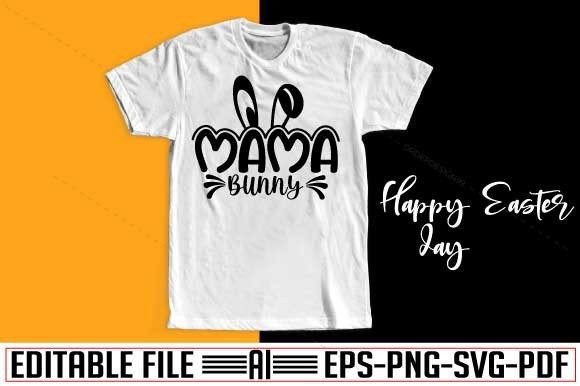
The Easter Mama Bunny SVG carries a gentle, slightly nostalgic feel. It is not a cartoon character trying too hard to be funny. Instead, it reads like a soft illustration you might see on a quality children’s book or a handmade kitchen linen. The linework appears intentional—not too thin, not chunky—and the negative space is balanced enough that the design does not feel crowded when you preview it at different sizes. That matters a lot when you are moving a vector file into an embroidery digitizing environment. If the original art has awkward gaps or overly complex curves, the digitized version often inherits those problems. Here, the shapes look like they were drawn with stitch placement in mind. The mama bunny’s ears have a natural tilt, the body reads as soft but not formless, and the Easter theme is present without being hammered in with clichés like giant eggs or exaggerated bows. It is a design that could sit comfortably on a tote bag, a baby onesie, a sweatshirt, or even a decorative pillow without feeling like it belongs only on a greeting card.
How It Performs Across Real Projects
I tested the Easter Mama Bunny SVG on four different product types: a mid-weight cotton sweatshirt, a linen tote bag, a cotton-poly blend baby bodysuit, and a structured cap. Each one taught me something different about where this design shines and where it needs a little consideration.
- Sweatshirt embroidery – Stitched at about four inches wide, the mama bunny held its shape beautifully. The fill areas were dense enough to feel substantial but not so heavy that the fabric puckered. I used a medium-weight cutaway stabilizer and a 75/11 sharp needle, and the design ran smoothly without skipped stitches. The thread colors I chose were a soft cream for the bunny body and a muted blush for the ears, which matched the gentle mood of the original vector.
- Tote bag design – Linen can be tricky because it has a loose weave and tends to shift under the needle. I hooped the fabric with a layer of tearaway stabilizer and a layer of water-soluble topping. The Easter Mama Bunny SVG handled this well. The satin stitch edges stayed crisp, and the fill stitching did not pull the fabric out of shape. I would feel confident offering this as a personalized gift option for spring market customers.
- Baby embroidery – On a small bodysuit, I reduced the design to about two and a half inches. The details remained readable. The ears were still distinct, and the bunny’s profile did not turn into a blur. This is where vector files with clean, open shapes really prove their worth. If the original art had fussy little lines or tiny decorative dots, they would have disappeared at this scale. Here, the design scaled down without losing its character.
- Cap embroidery – Curved surfaces are always a stress test. I placed the design on the front panel of a structured dad-style cap. The slightly wider shape of the bunny worked with the curve instead of fighting it. I did have to adjust the hoop angle slightly to keep the stitch direction uniform, but that is normal for any cap project. The design did not distort in a way that made the bunny look stretched or squashed.
For anyone running a small shop or an Etsy store, that kind of versatility means you can use this single embroidery file across multiple product lines without needing to reinvent your workflow every time. That is a real time saver when you are producing small batches for holiday markets or custom orders.
Where to Use the Design Carefully
No design is perfect for every scenario, and I want to be honest about where the Easter Mama Bunny SVG might need extra attention. If you are stitching on very thin or stretchy fabrics like lightweight jersey or silky rayon, the fill areas could cause some tunneling if you do not adjust your stabilizer. I recommend using a cutaway stabilizer with a bit more body than you think you need, and adding a layer of water-soluble topping on top to prevent the stitches from sinking into the fabric nap. On dark fabrics, the bunny’s outline needs to be clearly visible. If you are stitching the design in a single color, choose a thread that contrasts well against the background. A light tan or ivory bunny on a dark navy sweatshirt will read cleanly. A white bunny on a light gray shirt will disappear. Testing a quick stitch-out on a scrap piece of similar fabric is never wasted time.
Another consideration is the hoop size. Because the bunny has a somewhat wide silhouette thanks to the ears and the rounded body, you will need a hoop that can accommodate the full width comfortably. I tested it in a four by four hoop at a smaller scale, but if you plan to stitch it at six inches or larger, you will likely need a five by seven hoop or larger. Check your hoop size against the scaled design before you commit to a final layout. For caps, keep the design height under two inches to fit cleanly on the front panel without creeping toward the side seams. For baby items, the same height limit works well. For tote bags and sweatshirts, you have more freedom to go bigger.
Visual Appeal, Product Value, and Customer Trust
From a buyer’s perspective, the Easter Mama Bunny SVG reads as a thoughtful design. It is not trying to be everything at once. It knows it is a spring-themed bunny vector, and it owns that identity without overcomplicating it. When you turn it into a finished product—whether that is a personalized gift, a boutique item, or a craft fair bestseller—the design communicates care. Customers notice when a motif looks like it was meant for the product rather than slapped on as an afterthought. That clarity builds trust. It makes your handmade product look intentional, which is exactly what you want when someone is deciding whether to buy from your small shop or scroll past.
The design also works well for personalized gifts. A mama bunny on a tote bag with a name stitched underneath feels like a meaningful Easter present, not just seasonal decoration. For Etsy sellers, that translates to higher perceived value and more reasons for a buyer to hit the purchase button. The same goes for holiday embroidery on sweatshirts, kitchen towels, or baby blankets. The design’s gentle personality makes it giftable beyond just the immediate holiday window. A bunny motif can comfortably stretch into early spring decor or even year-round nursery use if the colors are chosen thoughtfully.
Practical Embroidery Designer Notes
Before you commit to a production run with the Easter Mama Bunny SVG, here are a few steps I always take with any new vector file, and I recommend you do the same.
- Test on scrap fabric first. Even if the vector looks clean on screen, the stitch-out can reveal surprises. I test on a fabric that matches my intended product—cotton for apparel, linen for bags, and so on. This gives me a real sense of how the design behaves under the needle.
- Check thread color contrast. Preview the design in grayscale or black and white to see if the different elements separate clearly. If the bunny body and the background fabric are too similar in value, the design will look flat.
- Review stitch density. If your digitizing software allows you to inspect stitch maps, look for areas where fill stitches might overlap too closely. Open shapes like those in the Easter Mama Bunny SVG usually digitize well, but checking density early prevents needle breakage and fabric damage later.
- Confirm hoop size. Measure the design at your intended scale and compare it to your hoop’s stitching field. Leave at least half an inch of margin around the design to allow for proper hoop tension.
- Test on light and dark fabrics. A design that works in white thread on a cream shirt may need a thread color swap for a navy or black background. I always make a test on both ends of the fabric color spectrum to confirm the design reads well.
- Use proper stabilizer. For this design, I recommend a medium-weight cutaway stabilizer for most apparel and a tearaway for stable woven fabrics like linen or canvas. Add a water-soluble topping if you are stitching on textured or napped fabrics.
- Check licensing before selling. The description notes that this is a print-ready vector file, and you can adjust the design to any size. However, always confirm whether the license allows commercial use of the finished embroidered product and whether you can sell the digital file itself as a design asset. Licensing terms vary, and it is your responsibility to know what is permitted before you list items on Etsy or at a craft fair.
These checks may feel tedious, but they save you from wasting materials and disappointing customers. A single test stitch-out can catch a problem that would otherwise ruin a batch of personalized gifts or a limited-edition holiday run.
Final Thoughts on This Design for Real Use
The Easter Mama Bunny SVG earns a solid place in my working library. It is not a flashy, trend-chasing graphic. It is a dependable, well-drawn vector that translates into embroidery with minimal fuss. For designers, crafters, and small business owners who need a spring-themed motif that works across apparel, bags, home decor, and gifts, this file offers real utility. The clean lines and balanced proportions give it staying power beyond a single season. I can see it being used for Easter markets, spring baby showers, personalized children’s gifts, and even nursery decor that stays relevant year-round. If you are looking for a design that will stitch cleanly, read well at multiple sizes, and appeal to customers who appreciate thoughtful handmade products, this is worth adding to your collection. Just remember to test it on your chosen fabric, check your stabilizer setup, and confirm the license terms before you start sewing for sale. That kind of preparation is what separates a smooth production run from a frustrating one.